
How Much Does a Website Cost in 2027? A Plain-English Guide
If you've ever asked multiple web development agencies for a quotation, you've probably received very different answers. One agency might provide a relatively small estimate, another might quote several thousand dollars, while someone else might want to discuss your requirements ...

Do you have same question in mind "How Much Does a Website Cost in 2027?"
If you've ever asked multiple web development agencies for a quotation, you've probably received very different answers.
One agency might provide a relatively small estimate, another might quote several thousand dollars, while someone else might want to discuss your requirements before giving you a number.
So, why is there such a significant difference?
The answer is simple: not every website is the same.
A basic corporate website, a custom eCommerce platform and a business web application might all be described as websites, but their design, functionality, development requirements and technical complexity are entirely different.
Understanding what influences website development costs can help you make better decisions, compare proposals and choose the right development partner for your business.
In this guide, we'll explain the factors that determine website development costs in 2027 and what you should consider before starting your next project.
Why Is There No Fixed Price for Website Development?
There isn't one universal price for building a website.
The cost depends on what you're building, how it needs to work and what your business expects from the final product.
For example, a 10-page corporate website with standard functionality may require considerably less development work than a five-page website with complex integrations, custom user experiences and business automation.
Some projects require only a content management system, while others need custom backends, databases, APIs, payment gateways and dedicated administrative dashboards.
That's why professional development agencies generally evaluate projects individually rather than applying the same price to every client.
At Forayeji, we follow a project-based pricing approach. We first understand your requirements, evaluate the technical scope and then prepare a tailored proposal outlining the deliverables, timeline and project cost.
7 Factors That Determine Website Development Costs
Let's look at the most important factors that influence the cost of developing a website.
1. Project Size and Number of Pages
The number of pages is one of the first things developers consider when estimating a website project.
A small business website might include:
Homepage
About Us
Services
Portfolio
Contact
A larger corporate website might require dozens of pages, multiple content categories, custom landing pages and dedicated sections for different services.
However, page count alone doesn't determine the cost.
A website with fewer pages can still require significantly more development work if those pages contain complex functionality or unique layouts.
2. Custom Design vs. Template-Based Development
Design plays an important role in both the development process and the final result.
There are generally two approaches:
Template-based development
Using an existing theme or template can reduce design and development time. This approach works well for businesses with straightforward requirements and limited customization needs.
Custom website development
Custom development involves designing and building a website around your brand identity, business requirements and user experience.
It offers greater flexibility and control over the final product, but requires additional planning, design and development effort.
The right approach depends on your business objectives, available resources and long-term plans.
3. Technology and Development Requirements
The technology behind your website can influence the development process, functionality and ongoing maintenance.
Different technologies serve different purposes.
WordPress: A flexible content management system suitable for corporate websites, blogs, business websites and content-driven platforms.
Next.js and React: Useful for modern web experiences, dynamic interfaces and applications that require greater frontend flexibility.
Vue.js: A flexible JavaScript framework for building interactive user interfaces and web applications.
Laravel: A powerful PHP framework for custom backends, APIs, business applications and complex application logic.
Sometimes, a combination of technologies is the best solution.
For example, a project might use Laravel for backend development and Next.js for its frontend interface.
A professional development partner should recommend technology based on your actual requirements rather than choosing a technology simply because it is popular.
4. Features and Functionality
The functionality of a website can significantly influence development complexity.
A standard business website might require a contact form, service pages and a content management system.
A more advanced platform could require:
User registration and authentication
Customer dashboards
Booking and appointment management
Product and inventory management
Payment gateway integration
Advanced search and filtering
Role-based access control
Automated notifications
Third-party API integrations
Every additional feature introduces its own design, development and testing requirements.
It's important to define the essential features before development begins so that the project can be planned accurately.
5. Third-Party Integrations
Modern business websites rarely operate independently.
Many companies need their websites to communicate with external platforms and services.
Common integrations include:
Payment gateways
CRM platforms
ERP and inventory systems
Marketing automation tools
Email services
Shipping and logistics providers
External APIs
Analytics and reporting platforms
For example, an eCommerce website might need to synchronize orders with an external inventory management system.
Although this may appear to be a small addition, integration development can involve authentication, data synchronization, error handling, security and extensive testing.
The number and complexity of integrations can therefore influence the overall project cost.
6. Content, Languages and Website Management
Website content is another important consideration.
Some businesses already have their written content, images and branding materials prepared. Others need assistance with content structure, copywriting, image selection and content migration.
Multilingual websites introduce additional requirements, including:
Language switching
Translation management
Multilingual URL structures
Localized content
Search engine optimization for different languages
If your business serves customers in multiple countries, these requirements should be considered during the initial planning stage.
7. Project Timeline and Ongoing Requirements
The expected delivery timeline can also influence development costs.
A project with a flexible timeline allows developers to organize design, development and testing more efficiently.
However, projects with tight deadlines may require additional resources or parallel development work.
Ongoing requirements are equally important.
Some businesses need a website developed once and maintained independently. Others require continuous improvements, new features, technical support and regular development assistance.
These different working arrangements can influence how a development partnership is structured.
Additional Costs to Consider After Launch
Website development doesn't necessarily end when the website goes live.
Depending on your requirements, you may also need to consider:
Domain registration: Your website needs a domain name, which typically requires annual renewal.
Web hosting: Hosting requirements depend on your website's traffic, technology, storage and performance needs.
Premium software and licences: Some themes, plugins and third-party services require recurring subscriptions.
Maintenance and security: Updates, backups, security monitoring and technical maintenance help keep your website operating properly.
Future improvements: As your business grows, you may need additional pages, integrations, functionality or performance improvements.
Discuss these requirements with your development partner before starting so you understand which services are included and which are billed separately.
How to Choose the Right Website Development Partner
Choosing a development partner based only on the lowest quotation can be a costly mistake.
A professional agency should understand your business objectives, technical requirements and long-term expectations.
Here are a few things worth evaluating.
1. Technical experience
Look at the technologies, platforms and types of projects the agency has experience working with.
2. Project understanding
A good development partner should ask questions about your business and requirements before recommending a solution.
3. Clear project scope
Make sure the proposal outlines the agreed features, deliverables, responsibilities and timeline.
4. Communication
Regular communication is important, particularly for larger projects and long-term development partnerships.
5. Ownership and handover
Clarify ownership of the source code, designs, hosting accounts, domain and other project assets.
6. Post-launch support
Understand what happens after launch and how future improvements, maintenance and technical issues will be handled.
Why We Don't Publish Fixed Website Development Prices at Forayeji
At Forayeji, we believe website development should be approached as a business investment rather than a predefined package.
Every client has different expectations, technical requirements and business objectives.
A corporate website, a custom web application and an eCommerce platform require different levels of planning, design and development.
Our project proposals consider several factors, including:
Project scope and required deliverables.
Number of pages and unique layouts.
Design and development complexity.
Required functionality and integrations.
Technology and infrastructure requirements.
Delivery timeline.
Ongoing development requirements.
Long-term collaboration and project volume.
We also work with businesses and agencies looking for reliable white-label development support.
For ongoing partnerships, project volume, collaboration requirements and the nature of the working relationship can also influence how we structure our proposals.
Before development begins, we discuss the requirements and provide a written proposal outlining the agreed scope, deliverables, timeline and project cost.
This ensures both sides understand what is being delivered before work starts.
How to Get an Accurate Website Development Proposal
If you're planning a new website or considering rebuilding an existing one, preparing a few details beforehand can make the initial discussion much more productive.
Here are some things to prepare:
Your business objectives: Explain what you want the website to achieve, whether that's generating enquiries, selling products or supporting internal business operations.
Reference websites: Share three or four websites you like and explain what you appreciate about their design or functionality.
Project requirements: Outline the pages, features and functionality you expect.
Design materials: Share any existing branding guidelines, wireframes or Figma designs.
Technical requirements: Mention any preferred technologies, integrations or existing systems.
Expected timeline: Provide a realistic target for project completion.
Future plans: Explain whether you expect to expand the website or require ongoing development support.
You don't need to have every technical detail figured out.
A good development partner should help you understand your options and identify the right approach.
Frequently Asked Questions
How much does it cost to build a website in 2027?
There is no universal price for website development. The final cost depends on the project's scope, design requirements, functionality, technology, integrations and timeline. The best way to understand the cost is to request a proposal based on your specific requirements.
Why do website development agencies charge different prices?
Agencies differ in technical expertise, development processes, project management, team structure and service quality. They may also interpret the same project requirements differently. Always compare the proposed deliverables and scope rather than looking at the price alone.
Is custom website development better than using WordPress?
Not necessarily. WordPress is an excellent option for many business websites and content-driven platforms. Custom development is more suitable when a project requires specialized functionality, complex business logic or greater control over the application architecture. The right choice depends on your requirements.
Can I start with a basic website and add features later?
Yes. A properly planned and developed website can evolve alongside your business. Starting with essential functionality and introducing additional features when needed can be a practical approach, provided the initial architecture supports future expansion.
Do I own my website after development?
Website ownership should be clearly defined in your development agreement. At Forayeji, our project handover terms cover the agreed project assets, including source code and relevant documentation, once the project payment obligations are fulfilled.
Do I need ongoing website maintenance?
Ongoing maintenance is recommended for most business websites. Regular updates, backups, security checks and technical monitoring help maintain stability and reduce potential issues.
Does Forayeji work with other agencies?
Yes. Forayeji works with businesses and agencies looking for a reliable white-label development partner. We can support agencies with website development, custom applications, backend development, WordPress development and other technical requirements behind their own brands.
Let's Discuss Your Next Project
Whether you're planning a new business website, developing a custom web application or looking for a reliable white-label development partner, the first step is understanding what you need.
At Forayeji, we work with businesses and agencies to turn their requirements into practical digital solutions.
Tell us about your project, your objectives and your expectations. We'll review your requirements, discuss the best technical approach and prepare a tailored project proposal.
No comments yet. Be the first.
Keep reading
More articles
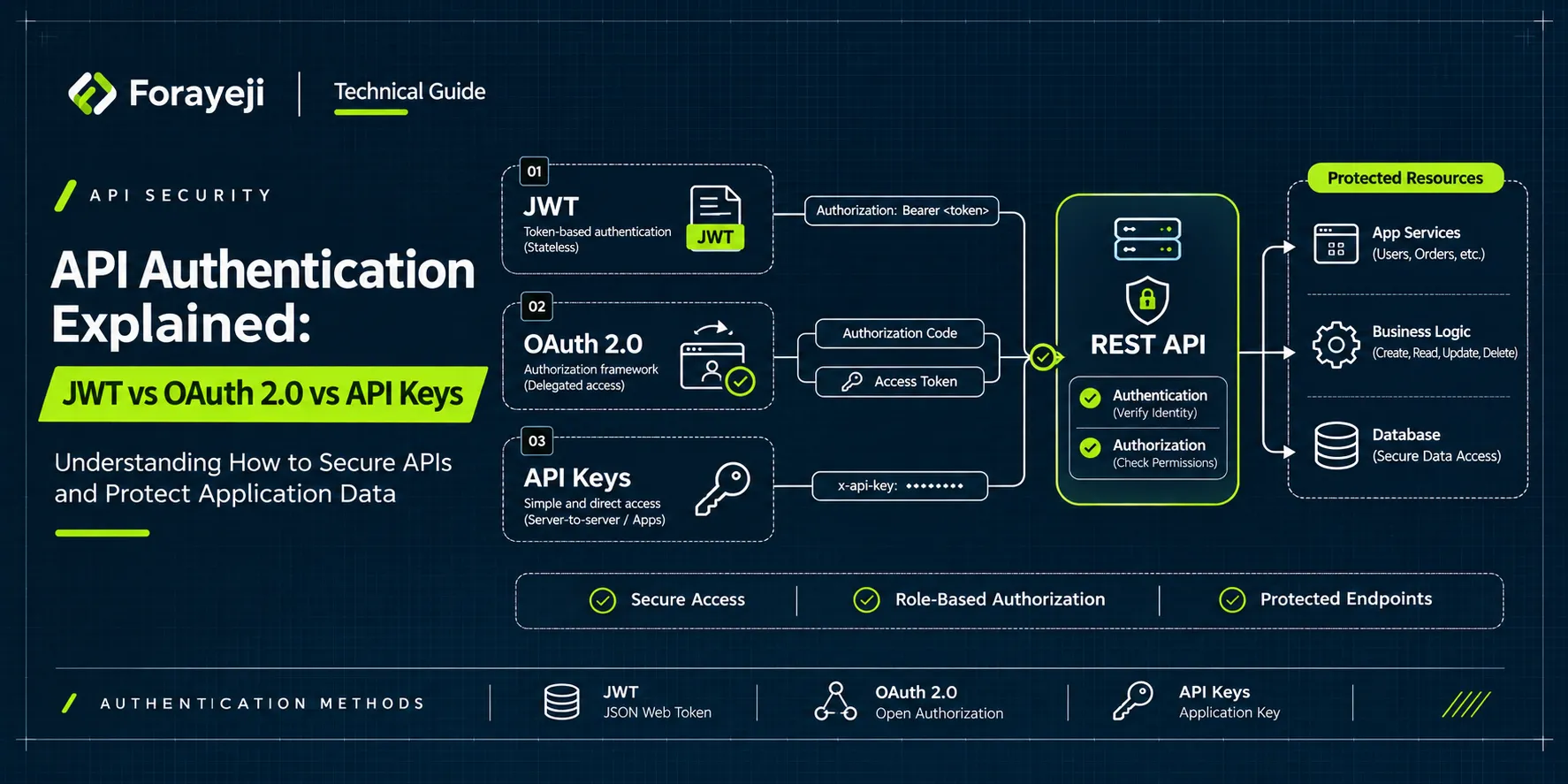
API Authentication Explained: JWT vs OAuth 2.0 vs API Keys
JWT, OAuth 2.0 and API keys solve different problems. Here is what each one is, when to use it, and how we combine all three in the Laravel and Next.js platform we build client projects on.
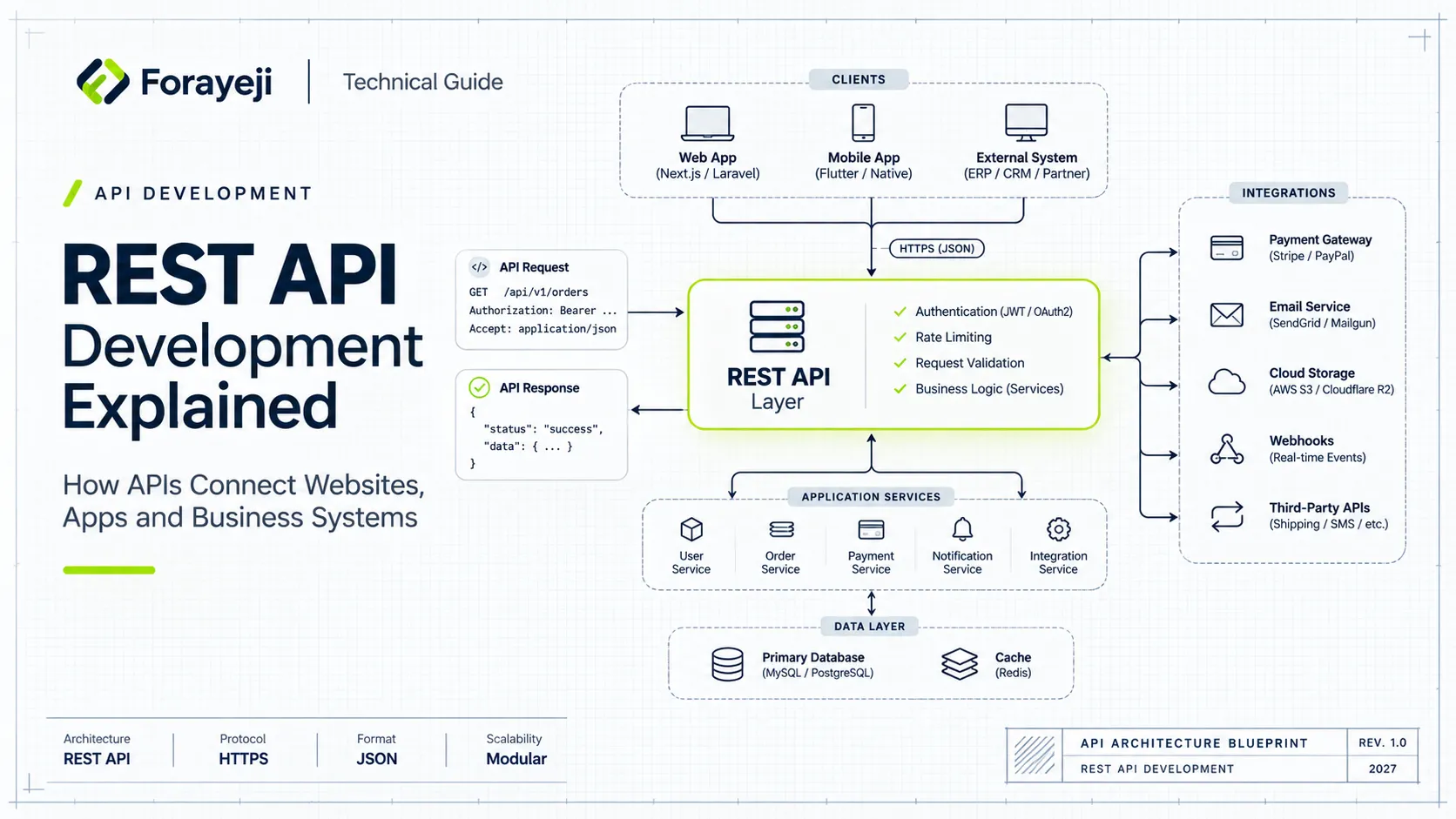
REST API Development Explained: How APIs Connect Websites, Apps and Business Systems
REST API development explained in plain English: how APIs let your website, mobile app and business systems share one source of truth, and the versioning, error, security and reliability rules we follow on every API we build.

How to Choose a Reliable White-Label Web Development Partner in 2027
Choosing a white-label web development partner? Check these eight things in 2027: proof of similar work, fixed quotes you can mark up, communication, brand protection, code ownership, process and support, plus the red flags and questions to ask before you sign.
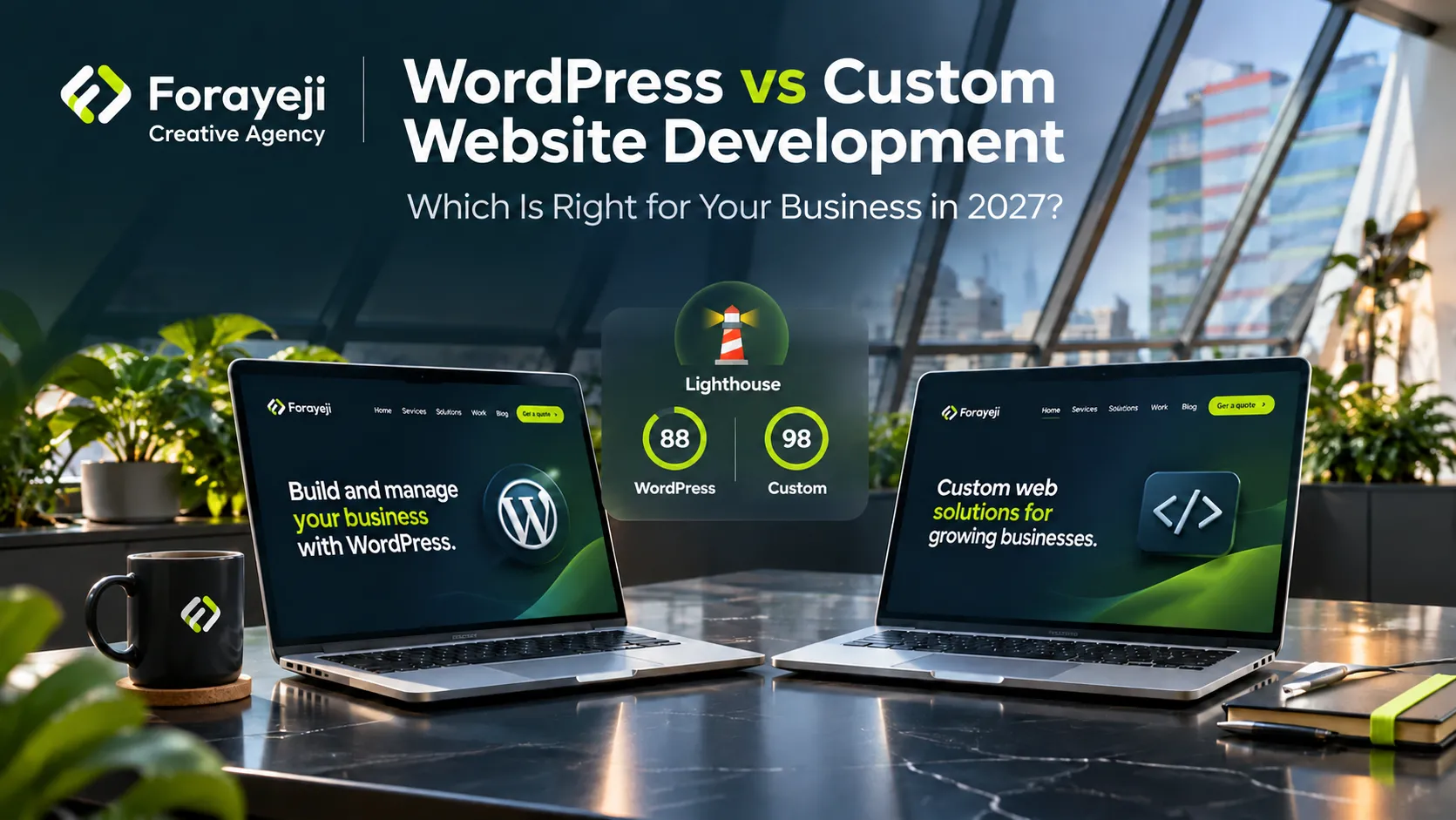
WordPress vs Custom Website Development: Which Is Right for Your Business in 2027?
Choosing the right technology for your business website is one of the most important decisions you will make before starting development. A website is more than an online presence. It can become your primary marketing channel, a lead-generation platform, a customer portal, or even an essential ...
Next step
Have a project in mind?
Tell us what you're trying to achieve. We reply within one working day with honest advice and, if it fits, a written plan with a fixed quote.