
How to Choose a Reliable White-Label Web Development Partner in 2027
Choosing a white-label web development partner? Check these eight things in 2027: proof of similar work, fixed quotes you can mark up, communication, brand protection, code ownership, process and support, plus the red flags and questions to ask before you sign.

A reliable white-label web development partner delivers work to your standards under your brand, keeps you informed without being chased, quotes fixed prices you can mark up, and never steps between you and your client. Before you sign with anyone, check eight things: proof of similar work, how they quote, how they communicate, how they protect your brand, who owns the code, how their process fits yours, what happens after launch, and whether they will start with a small pilot.
This guide walks through each of them, with the red flags to watch for and the questions to ask on your first call.
What a white-label web development partner actually does
A white-label partner builds websites, web applications or apps that your agency sells and delivers as its own. Your client talks to you, sees your name on every document and never needs to know a second team exists. For you it means taking on more projects, or projects outside your in-house skills, without hiring. For your client it should feel exactly like working with you. If you are new to the model, our page on white-label development for agencies explains how it works day to day.
That only works when the partner behaves like part of your team. The checks below are about finding one that does.
1. Proof they have built work like yours
Ask for live examples that match what you sell: company websites, WooCommerce shops, booking systems, customer portals or mobile apps. Many white-label projects cannot be shown publicly, so a good partner will offer a private walkthrough or references from other agencies instead.
Look at speed on a phone, not just the design. Run their live examples through Google PageSpeed Insights.
Ask what was hard on a project and how they solved it.
Ask how many projects they deliver a year and how long their typical client stays.
2. Clear, fixed quotes you can mark up
You need to know your margin before you send a proposal. A reliable partner turns your brief into a written plan with a fixed price, a timeline and a clear list of what is included. Hourly-only quotes push the risk onto you. If you want a feel for what drives the price, read how much a website costs in 2027.
Check how they handle change requests. The best answer is simple: anything outside the written plan gets its own small quote before work starts, so neither side is surprised.
3. Communication and working-hour overlap
Most white-label problems are communication problems. Before you start, agree on:
One contact person who answers within the same working day.
Weekly progress updates, with a link you can open, not just a status line.
Enough overlap with your working hours for a live call when you need one.
The tools: shared chat, a project board and a staging site you can show your client.
Ask how quickly they send a quote. A partner that takes a week to quote will take a week to answer questions during the project.
4. Your brand stays in front
White label means invisible. Make sure the partner will sign an NDA and agrees in writing that:
They never contact your client directly unless you ask them to.
Nothing they deliver carries their name: no footer credits, no hidden links, no mentions in the code or emails.
They never show your client work in their own portfolio.
5. Code quality and who owns the code
When the project is paid, the code should belong to you or your client, with full access to the repository, hosting and every account. Ask which technologies they use, for example WordPress and WooCommerce for content sites and shops, or Laravel and Next.js for custom applications. Not sure which fits your client? Compare WordPress and custom development.
Ask whether they follow published standards such as the WordPress coding standards, guard against the OWASP Top 10 security risks, write tests for business logic and document how to run the project. Avoid partners who build on closed, home-made systems that only they can maintain. That locks you in.
6. A process that fits yours
A reliable partner works from a written plan, shows progress on a staging site, tests on real phones and browsers, checks the Core Web Vitals before launch, and hands over with a short checklist. Ask them to describe one project from brief to launch. If the answer is vague, the process probably is too.
7. Support after launch
Your client will need changes after launch, and they will ask you, not the partner. Agree up front on bug fixes, response times, updates for WordPress plugins or app stores, and the price of small changes. A partner that disappears after the last invoice is not a partner.
8. Start with a small paid pilot
Do not test a new partner on your biggest client. Start with a small, real project: a landing page, a WooCommerce tweak or one feature of an app. You will learn more from two weeks of working together than from any sales call.
Red flags to watch for
Prices far below everyone else with no written scope.
No single contact person, or a different person every time you write.
Reluctance to sign an NDA or to hand over code and accounts.
No staging site, so you only see the work at the end.
Promises to deliver anything in any technology in a few days.
Questions to ask before you sign
Can you show me two projects similar to this one, live or in a private walkthrough?
What exactly is included in your fixed quote, and how do you price changes?
Who will I talk to, and how often will I get updates?
Will you sign an NDA and keep your name out of everything you deliver?
Who owns the code and accounts when the project is paid?
What do you do after launch, and how fast do you fix bugs?
Can we start with a small pilot project?
A simple scorecard to compare partners
When you talk to two or three candidates, score each one from 1 to 5 on the same points, right after the call while it is fresh. Independent reviews help too: read what other agencies say about them on sites such as Clutch.
Relevant work: did they show projects like the ones you sell?
Quote clarity: is it clear what is included, what is not, and what changes cost?
Speed of reply: how long did the quote and your follow-up questions take?
Brand protection: NDA, no credits, no direct client contact, in writing?
Code and access: do you get the repository, hosting and accounts?
Process: written plan, staging site, testing and a handover checklist?
After launch: clear support terms and response times?
The cheapest partner rarely wins this scorecard, and that is the point: a missed deadline or an unhappy client costs you far more than the difference in price.
What a good first month looks like
Once you have chosen a partner, the first project sets the tone. In a healthy first month you should see:
Week one: a written plan that repeats your brief in their own words, with questions about anything unclear.
Week two: a staging site with the first screens, on your branding, that you could show your client.
Week three: working features, tested on phones, with a short note of what changed.
Week four: a handover or launch checklist, and an agreed way to report bugs.
If you reach week two and have seen nothing you could show your client, raise it straight away. Good partners welcome that conversation.
Offshore or local: does it matter?
An offshore team, for example in Bangladesh, can give you agency-quality work at a price that leaves room for your margin. The checks above matter more than the country: clear quotes, good English, overlapping hours and a written process are what make an offshore partner reliable. You can meet our team in Bangladesh to see how we work.
How Forayeji works with agencies
Forayeji Creative Agency is a development team in Bangladesh that works as the white-label partner behind agencies: your brand in front, our team behind it, under NDA. You get a quote within 48 hours, a written plan with a fixed price you can mark up, weekly updates and the code when the project is done. We build websites, web applications, custom software and mobile apps, have delivered 307+ projects for clients in 24+ countries, and work in English and Bangla.
Read more about white-label development for agencies, or tell us about your project and we will send a quote within 48 hours.
No comments yet. Be the first.
Keep reading
More articles
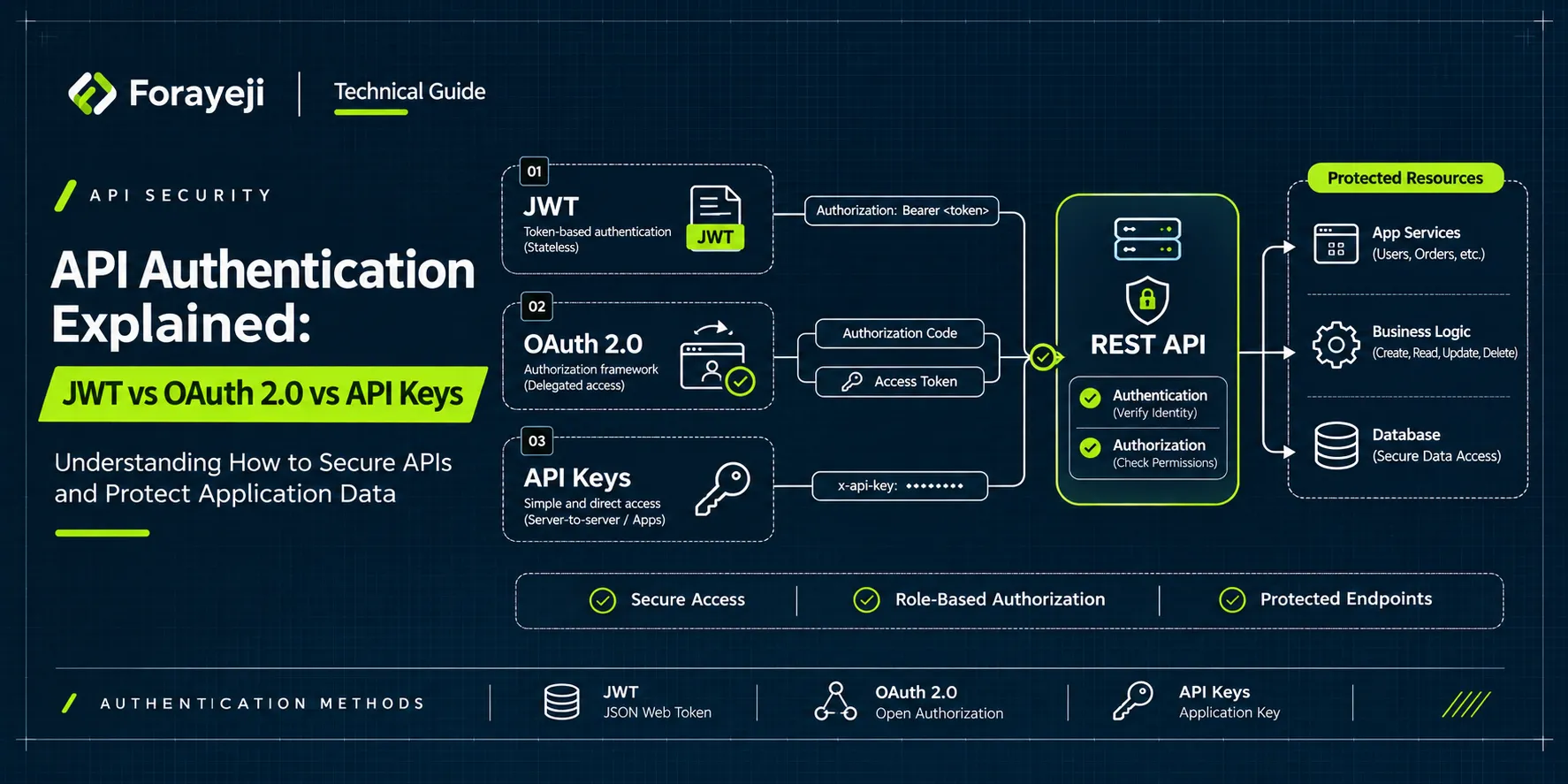
API Authentication Explained: JWT vs OAuth 2.0 vs API Keys
JWT, OAuth 2.0 and API keys solve different problems. Here is what each one is, when to use it, and how we combine all three in the Laravel and Next.js platform we build client projects on.
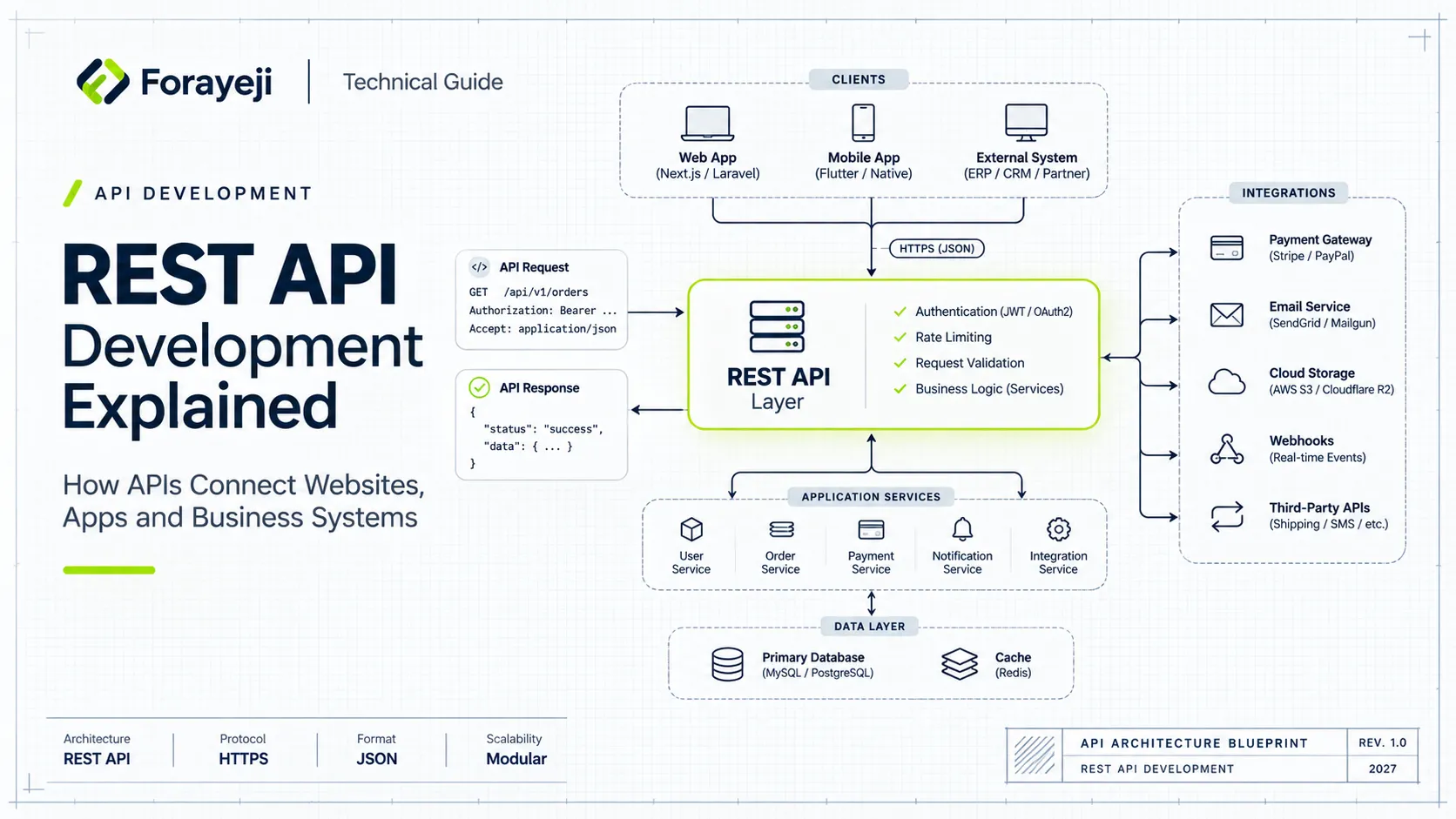
REST API Development Explained: How APIs Connect Websites, Apps and Business Systems
REST API development explained in plain English: how APIs let your website, mobile app and business systems share one source of truth, and the versioning, error, security and reliability rules we follow on every API we build.
WordPress vs Custom Website Development: Which Is Right for Your Business in 2027?
Choosing the right technology for your business website is one of the most important decisions you will make before starting development. A website is more than an online presence. It can become your primary marketing channel, a lead-generation platform, a customer portal, or even an essential ...
How Much Does a Website Cost in 2027? A Plain-English Guide
If you've ever asked multiple web development agencies for a quotation, you've probably received very different answers. One agency might provide a relatively small estimate, another might quote several thousand dollars, while someone else might want to discuss your requirements ...
Next step
Have a project in mind?
Tell us what you're trying to achieve. We reply within one working day with honest advice and, if it fits, a written plan with a fixed quote.